
Price tracking
Track how your supplier rates move over time
A three per cent increase does not show on one invoice. It shows over three years. Pilboard keeps the price history so the drift becomes visible.
- Price history
- Cost per period
- Analysis by category
- Exportable reports
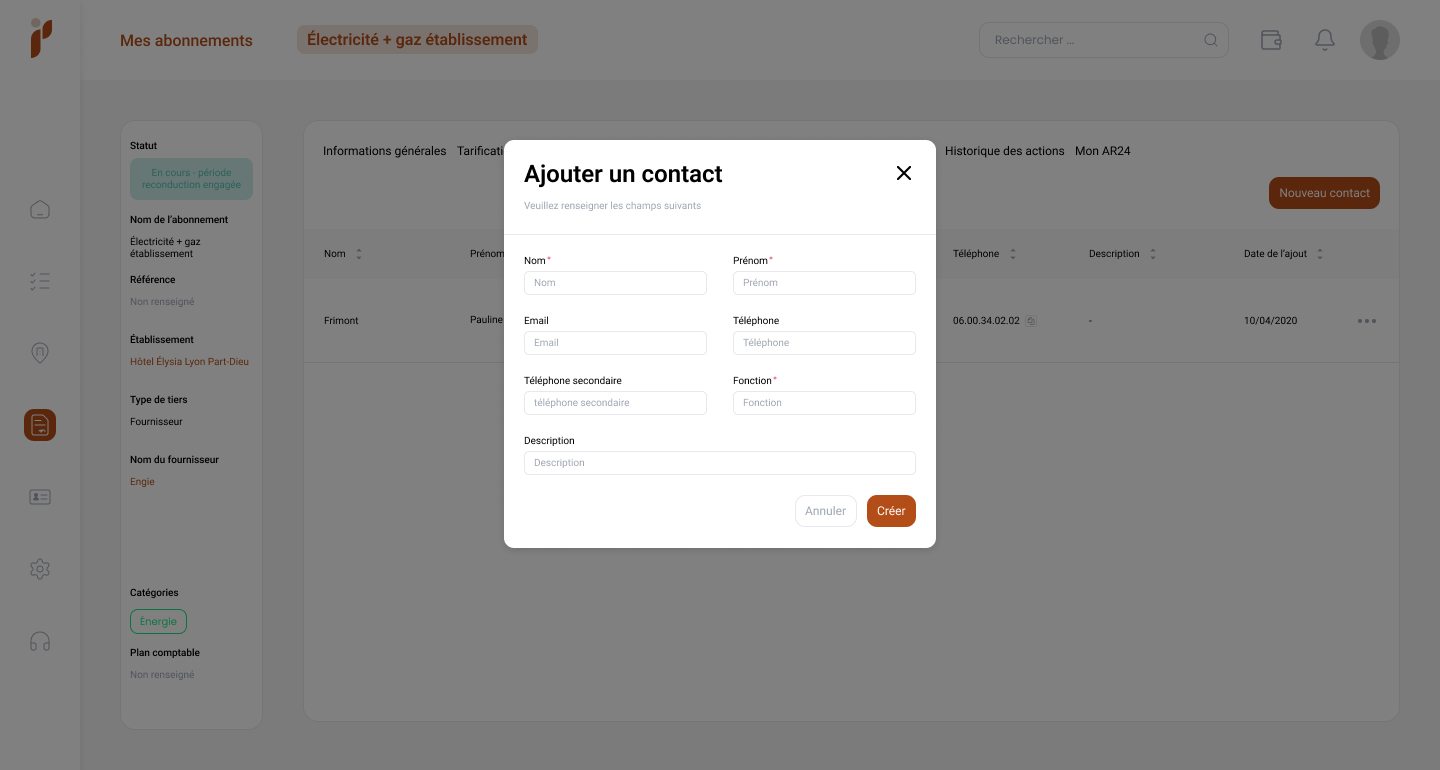
Increases get through because they are small
No price revision triggers an alert. They only become visible added together, once turning back is hard.
Many supplier contracts provide for an annual revision, often indexed to a published benchmark. Taken alone, each revision looks reasonable and nobody contests it. But the business never compares today’s rate with the one signed at the start, because that original rate is nowhere usable: it is in the contract, on paper, in a binder. So you negotiate at renewal without knowing how far you have drifted — and therefore without an argument.
No history, no comparison
The original rate sits in the signed contract, not in a table you can read.
The index applied goes unchecked
An indexed revision can be verified. That assumes you kept the formula and the starting base.
Negotiating without ammunition
Without figures you argue about a percentage. With them you argue about a trajectory.
What price tracking brings out
Every amount is dated and kept. Everything else follows from that single discipline.
-
The full price history
Each revision is recorded with its date and its amount. The curve of what you actually pay becomes legible over the life of the contract.
-
Real cost per period
Monthly, quarterly or annual, excluding or including tax: cost is brought back to the period you use to decide.
-
Comparison by category
Energy, telecoms, maintenance, leasing: you spot the line rising faster than the whole.
-
The view by supplier
Total committed with one provider, across all contracts, reveals concentrations you did not suspect.
-
Gaps flagged
A revision above what the contract provides, or above the expected index, shows up as it is entered.
-
Exportable reports
Analyses export to feed a board meeting, an annual review or a renegotiation file.
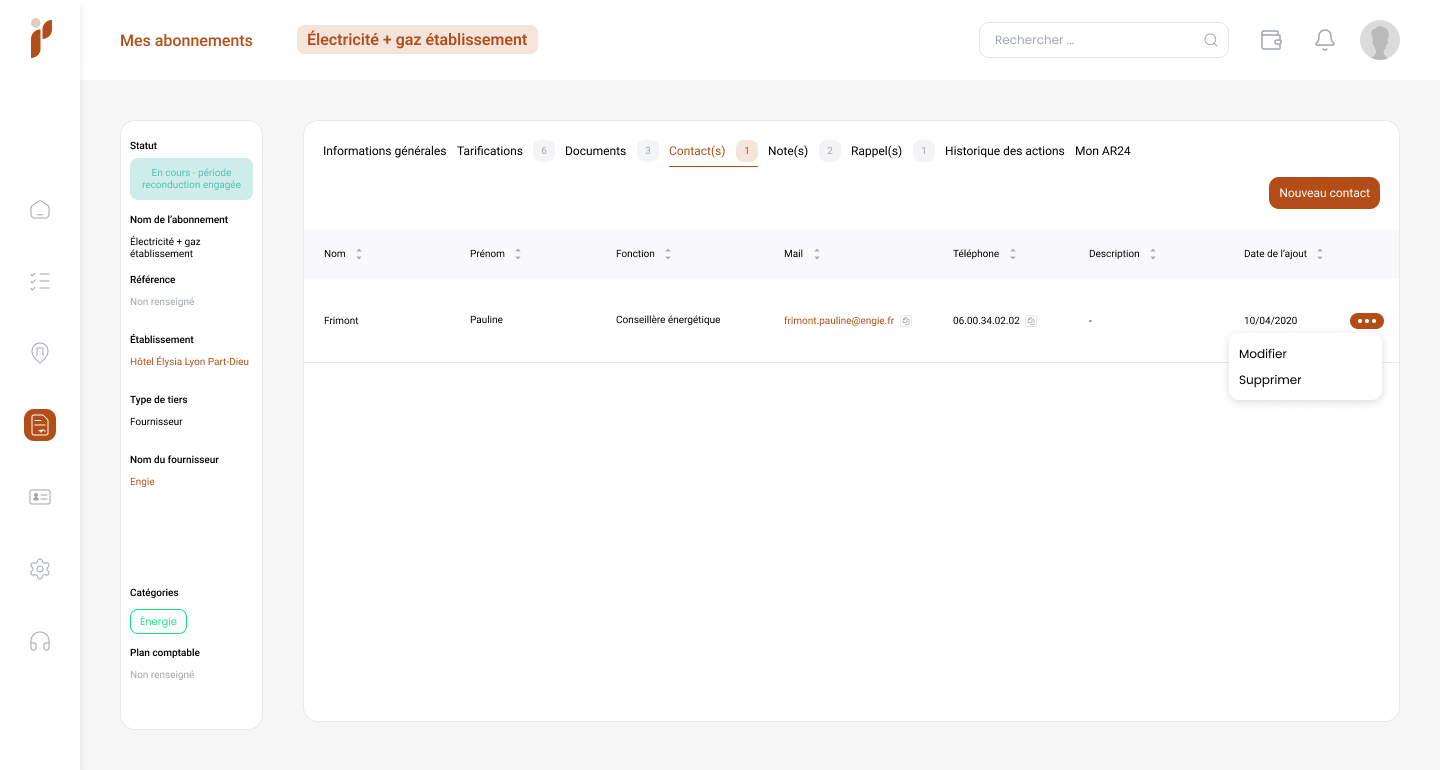
How you build price tracking
All it takes is dating the amounts. Everything else is derived.
-
You enter the original rate
The starting amount and the signature date are the basis of every later comparison.
-
You record the revision formula
Reference index, frequency, any cap: what will let you check the next increase.
-
You log each revision
With every new price list, the amount and its date join the history.
-
You read the trajectory
Three-year progression, by contract, by category and by supplier, becomes a chart rather than a hunch.
-
You negotiate with the figures
At renewal, the cumulative gap and the comparison with other sites are on the table.
What you gain
Drift made visible. A cumulative fifteen per cent over three years no longer slips by.
Revisions you can verify. You check that the indexation applied matches what the contract provides.
A documented negotiation. You arrive with the history and the comparisons, not with an impression.
A better-anticipated budget. Past trajectory informs next year’s contractual load.
Frequently asked questions
How do I check that an indexation was applied correctly?
You need three things: the starting rate, the revision formula in the contract and the index value at both dates. Pilboard keeps the first two and the history of amounts, which lets you recalculate and compare with what the supplier invoiced.
Can prices be tracked over several years?
Yes, that is the whole point: each amount is dated and kept with no time limit. It is the depth of the history that makes drift legible.
Can I compare the same service across two sites?
Yes, as long as the contracts are attached to their site and filed in the same category. That is often where the easiest gaps to correct show up.
Are amounts tracked both excluding and including tax?
Yes. Management control thinks in net terms, operations often thinks in gross: both values are kept and displayed.
When should a supplier contract be renegotiated?
The right moment is before the notice period closes, with the price history in hand. Renegotiating after renewal is asking a favour; doing it before is discussing a renewal.
Do I have to enter every invoice to track prices?
No. Recording the price lists and their successive revisions is enough. Invoices serve as supporting evidence and attach to the contract, but price tracking rests on contractual rates, not on consumption.
Explore further
Tracking rates is mostly about preparing the conversations that come later.
Look at the trajectory of your rates
Bring one contract and its last three price lists: we will show you the curve you had never seen.