
Secure archiving
Archive your contract documents without losing the trail
A contract is used twice: the day it is signed, and the day you have to prove what it says. In between, it must stay reachable, intact and traceable.
- Secure storage
- Change history
- Rights by role
- GDPR compliance
A document you cannot find proves nothing
On the day of a dispute, the question is not whether you were right. It is whether you can show it.
Contract documents pile up on supports that were never designed to keep them: personal inboxes, shared drives with no structure, USB sticks, sometimes paper binders. Each of those raises the same three problems. You do not know who can reach them. You do not know whether the version you are reading is the latest. And you do not know what was changed, or by whom. In an audit, an inspection or a disagreement with a supplier, those three unknowns are enough to weaken a case that is sound on the merits.
Access nobody controls
A shared folder always ends up open to more people than intended.
The version that holds stays unclear
Three files carry almost the same name. None of them says which one applies.
No trace of changes
Without a history, there is no saying what changed, when, or on whose decision.
What archiving guarantees you
Keeping is not enough: you have to be able to retrieve, date and prove.
-
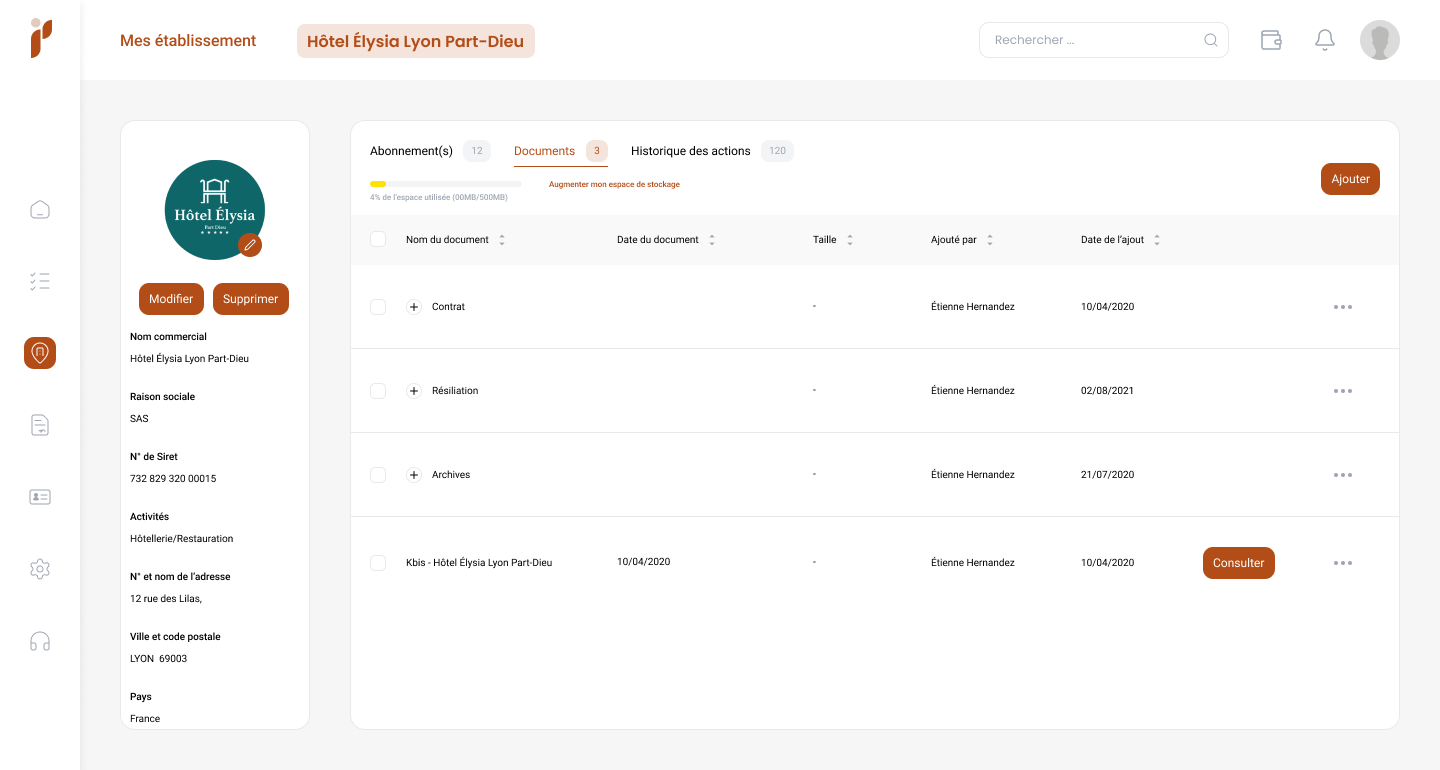
Central, protected storage
Documents leave inboxes and shared drives for a single, backed-up space attached to your contracts.
-
Rights by role and by site
Each user reaches the documents in their scope. Roles and privileges are set site by site.
-
A history of changes
Every upload, replacement or deletion is recorded with its author and its date. You always know what changed.
-
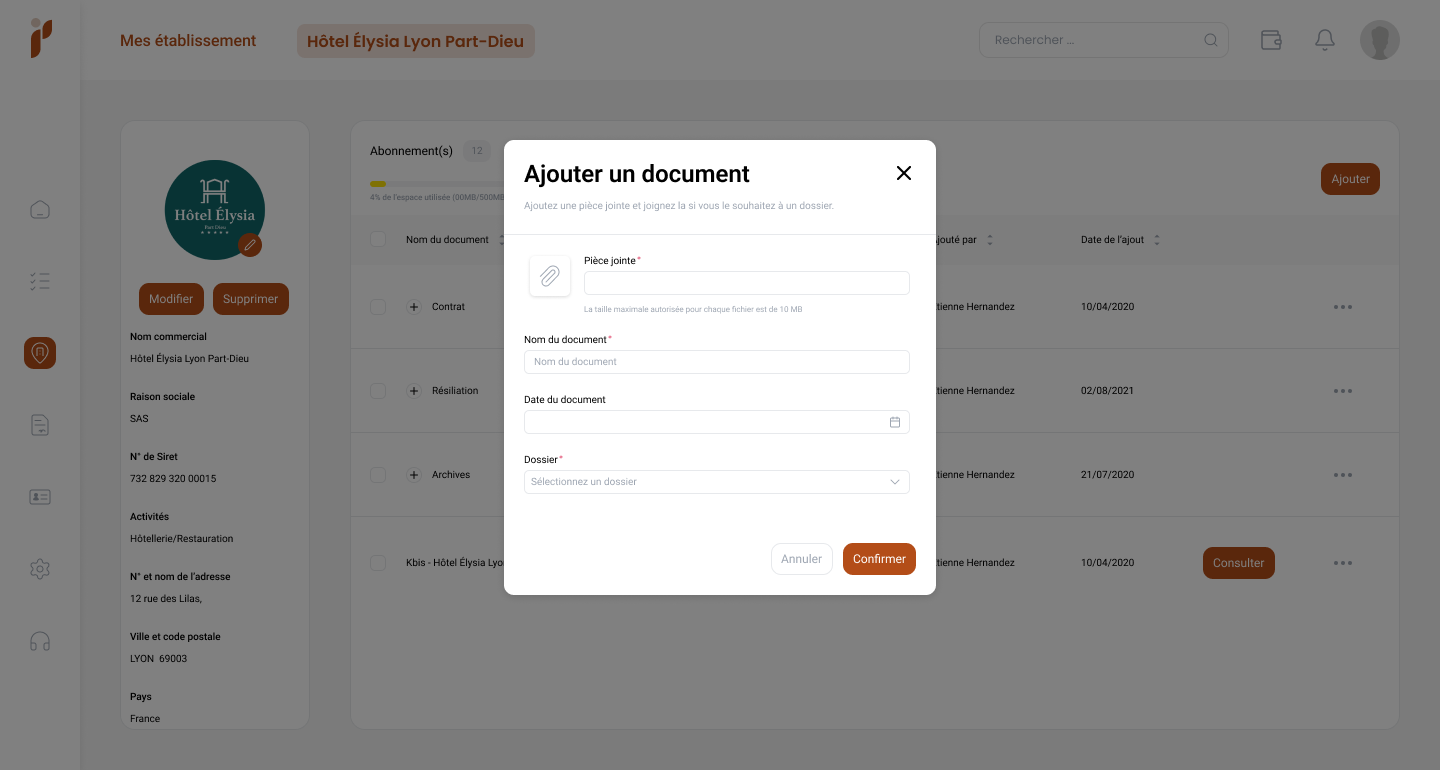
Documents typed and dated
Contract, amendment, price list, certificate, invoice: the type and validity date say which piece holds at which moment.
-
Expiring documents tracked
Insurance certificates, approvals and licences that expire are flagged just like contracts.
-
Compliance you can sustain
Retention periods, data minimisation and access traceability are handled by design, not by internal memo.
How you secure the document base
Work contract by active contract, not by volume: what commits you today comes first.
-
You identify the pieces that commit you
Signed contracts, amendments, price lists and certificates with a validity period. The rest is secondary.
-
You attach them to their contract
Each piece joins the record of the contract it documents, instead of living in a parallel folder.
-
You type and you date
The document type and its validity period are what settle a later argument between two versions.
-
You set the access
Who reads, who uploads, who replaces: rights are defined by role and by site.
-
You let the history do the work
Every movement is traced. The evidence file builds itself as the tool is used.
What you gain
An evidence file built in advance. On the day of a dispute or an inspection, there is nothing to reconstruct.
The right version, every time. Typing and dating remove the ambiguity between a contract and its amendment.
Access under control. You know who can see what, and an arrival or departure is handled in one operation.
Compliance you can demonstrate. Traceable access and changes answer an auditor’s questions.
Frequently asked questions
How long should a supplier contract be kept?
The usual rule is to keep the contract throughout its performance and then for the applicable limitation period — five years in French commercial matters as a general rule. Some pieces, particularly those tied to safety or insurance, carry their own periods: the cleanest approach is to set a duration per document type.
What happens to a document when the contract is terminated?
It stays attached to the contract, which moves to archived. The file is not deleted: it simply leaves the active views while remaining readable and usable if a question comes up later.
How do I know which version of a document applies?
Through the type and the validity date. An amendment dated after the contract prevails over the clauses it modifies, and the history lets you reconstruct the sequence of versions.
Who can delete a document?
Only the roles you grant that privilege to. And the deletion is itself traced, with its author and its date: you never lose the information that a piece once existed.
Is Pilboard GDPR compliant?
Contract documents are handled with named access, traceable consultation and configurable retention periods. Compliance stays a shared job: the tool provides the means, your internal policy sets the rules.
Can I get my documents back if I leave the tool?
Yes. Uploaded documents remain yours and can be exported. An archive that locked your files in would be a risk, not a safeguard.
Explore further
Securing documents is as much a question of method as of storage.
Put your contract documents somewhere safe
In thirty minutes we look together at where your documents live today and what a structured base would give you.