
Renewal alerts
Never let a contract renew without you
An automatic renewal can lock you in for twelve to thirty-six months. Pilboard warns you before the notice period closes, not after.
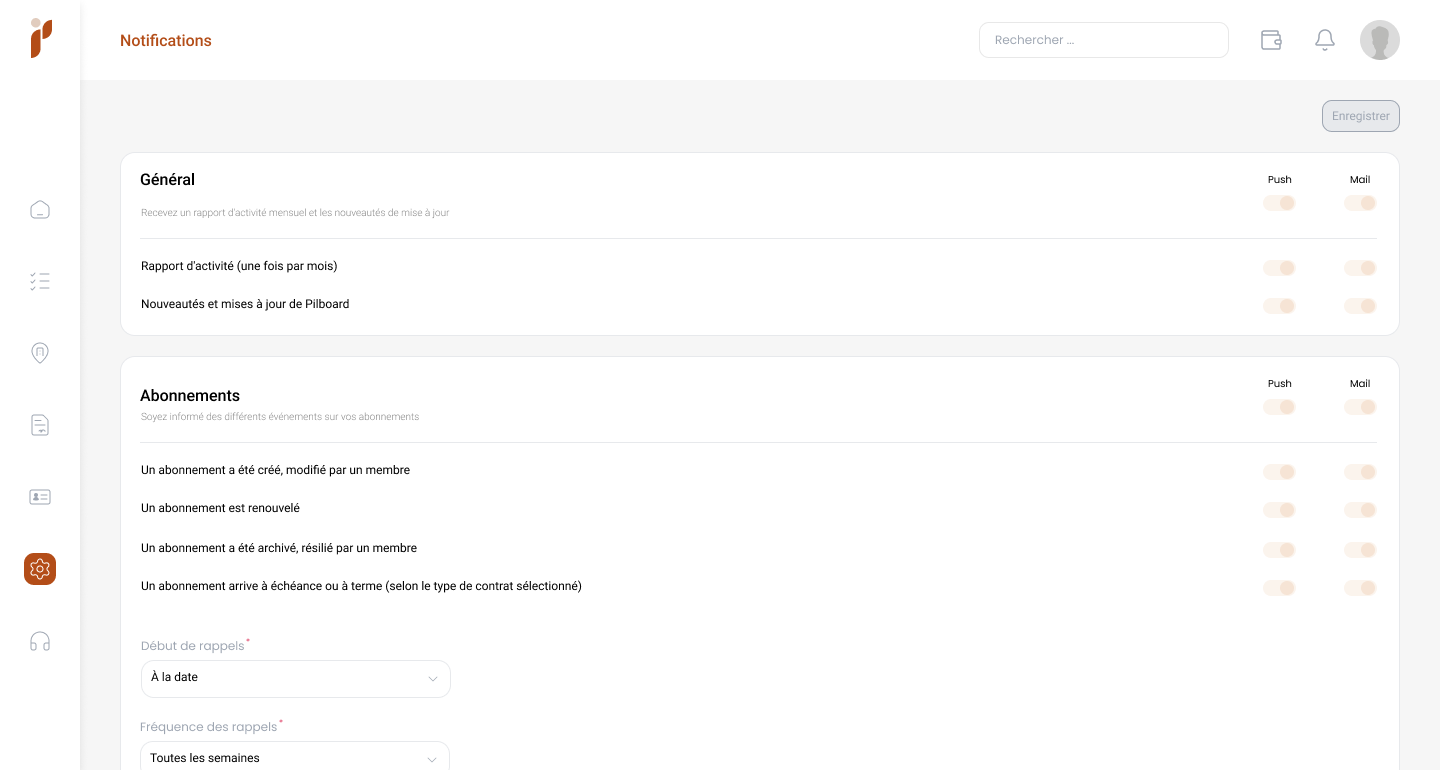
- Configurable alerts
- Notice period calculated
- Several recipients
- Reminders until handled
The notice period is the real deadline, not the end date
By the time you notice a contract is renewing, it is almost always too late: the notice window closed first.
A supplier contract carries two dates that have nothing to do with each other. The end date, which everyone remembers, and the last day to give notice, which is the one that counts. Between them there is often one to three months. In B2B there is no consumer safety net to catch a missed notice period. So the contract runs for another fixed term, on the original terms, sometimes indexed. And the only alert you get is the invoice for the new cycle.
The date being watched is the wrong one
The end date goes in a calendar. The notice period expired two months earlier.
No safety net in B2B
Consumer protections do not apply between businesses. A missed notice period is final.
An alert sent to one person
A reminder in somebody’s calendar disappears with their holiday or their resignation.
How the alerts work
The principle: the alert fires on the notice period, it reaches several people, and it keeps coming until somebody decides.
-
The notice period calculated, not typed
You enter the end date and the notice length: Pilboard derives the last day to give notice and alerts from there.
-
Lead times you choose
Ninety, sixty, thirty days: you set the steps that match how your decisions get made.
-
Several recipients
The alert reaches the contract owner, their manager and procurement if you want it to. It never rests on a single inbox.
-
Reminders until it is handled
Until the contract is marked as dealt with — renewed, renegotiated or terminated — the reminder comes back.
-
Settings per category
Energy contracts and software subscriptions do not need the same lead time: each category gets its own.
-
The letter template ready
When the decision is to terminate, the termination letter is generated from the contract record.
How you put the alerts in place
Three pieces of information per contract are enough for the mechanism to work.
-
You enter the key dates
Start date, end date, notice length and renewal type. Those are the only fields that matter.
-
You set the alert steps
By default or by category: how far ahead you want warning, and at which successive reminders.
-
You name the recipients
At least two people per contract, so one person’s absence blocks nothing.
-
Pilboard warns and follows up
The alert fires at the first step and returns at the next ones until the contract is handled.
-
You decide and you record it
Renew, renegotiate or terminate: the decision is stored on the record, with its date and its author.
What you gain
No more renewals by default. Every renewal becomes a decision, taken in time, with the facts.
A real negotiating window. Being warned ninety days ahead means having time to test the market.
Responsibility shared. The deadline is no longer one person’s problem and one person’s calendar.
A record of the decision. You know who chose to renew, when, and on what grounds.
Frequently asked questions
When exactly does the alert fire?
On the last day to give notice, which Pilboard calculates from the end date and the notice length — not on the end date itself. That is the only date that still leaves you room to act.
Does consumer law protect my company from automatic renewal?
Generally not in B2B. French consumer protections such as the Chatel and Hamon acts target consumers and, under strict conditions, some professionals acting outside their main activity. For an operating supplier contract, assume the contractual notice period applies with no safety net.
Can alerts be sent by email?
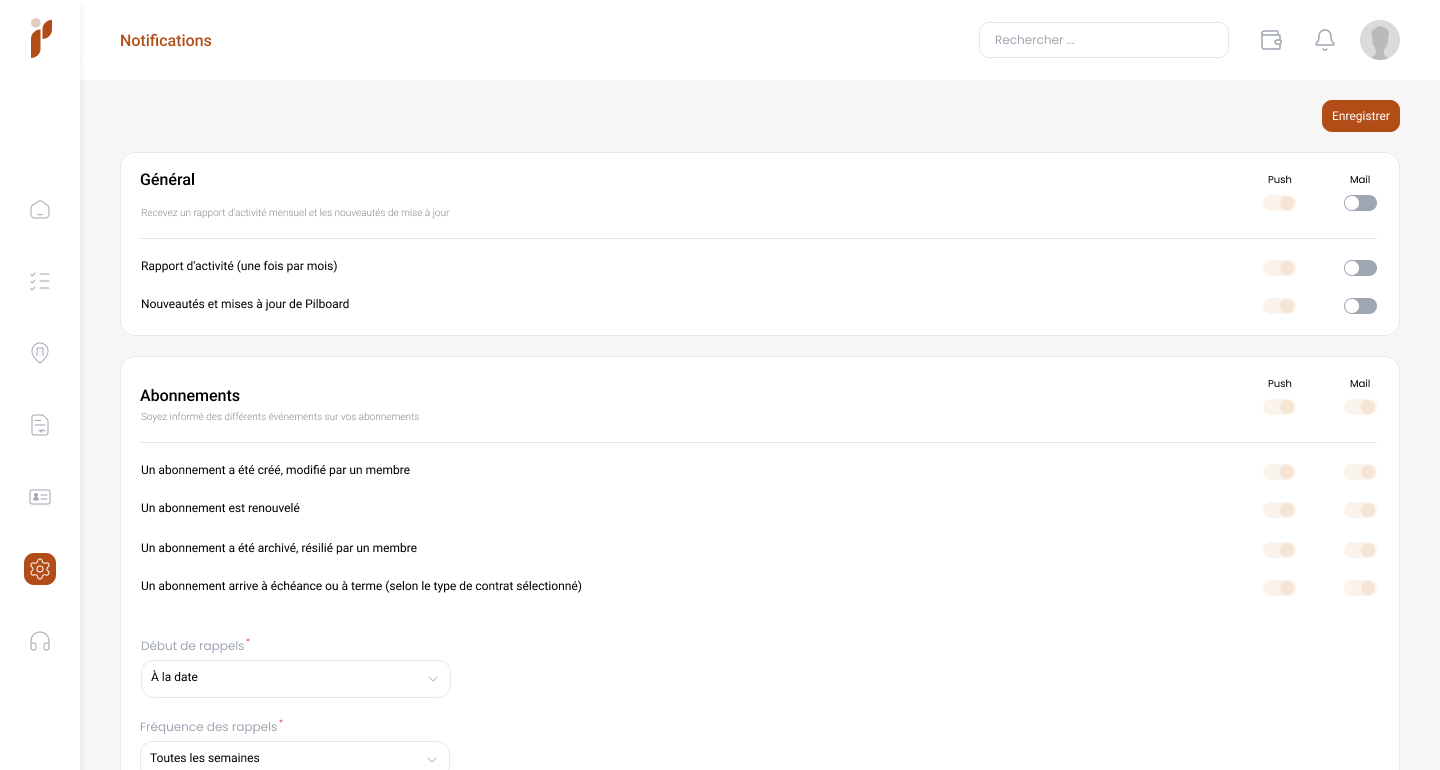
Yes. Notifications go to the recipients you name, and they also stay visible on the dashboard in the list of upcoming reminders.
What happens if nobody acts on an alert?
It returns at the following steps and the contract stays in the upcoming reminders. The reminder only stops once the contract is marked as handled — renewed, renegotiated or terminated.
Can lead times differ by contract type?
Yes. An energy contract, an equipment lease and a software subscription do not call for the same anticipation. Lead times are set per category, then adjusted contract by contract if needed.
What about open-ended contracts?
They have no end date but they do have a notice period. You give them a periodic review date — usually annual — so they come back in front of somebody instead of running indefinitely.
Explore further
Contract deadlines are managed as much by method as by alerting.
Take back control of your deadlines
Show us two contracts and their notice periods: we will show you the alerts Pilboard would have fired, and when.